Rottweiler Dog Silhouette: A Designer's Hands-On Review
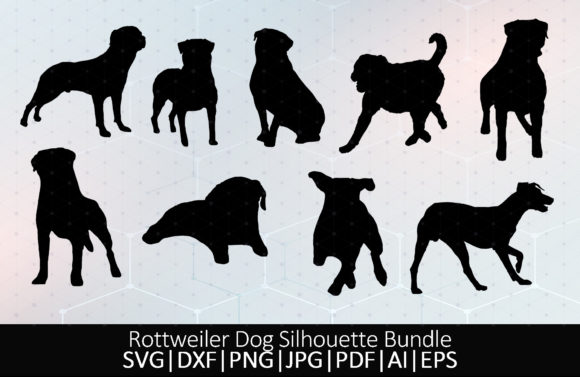
When I first opened the Rottweiler Dog Silhouette bundle, I was looking for a clean, impactful shape that could hold its own in a machine embroidery project without turning into a muddy mess of stitches. Silhouette designs can be deceptively simple—they either land with striking clarity or they read as a blob once they hit fabric. This one, I am happy to report, lands firmly in the first camp. The profile is well-defined, with a confident stance and a head shape that carries the breed's distinctive blocky structure and alert ears. There is a quiet seriousness to the pose, which feels true to the Rottweiler temperament. It is not a cartoon or a fluffy interpretation. It is a solid, recognizable outline that respects the breed's physical character.
This kind of design naturally suits a range of projects, from custom apparel to embroidered patch work, but it also asks for a certain level of thought in placement and fabric choice. Let me walk through what I have learned by stitching this out, testing it on different blanks, and considering how it would behave in a real production run for a small shop product or a personalized gift.
First Impressions: Shape, Mood, and Natural Fit
The Rottweiler Dog Silhouette has a grounded, watchful feel. The neck is thick, the back is straight, and the tail hangs in a natural curve. There is no excessive detail trying to fake depth—just a clean edge that relies on the outer contour to communicate the breed. For embroidery, that is a gift. It means the satin stitch or fill stitch you choose will have a clear path to follow, and the final shape will hold its integrity even at moderate sizes. I immediately thought of this design on a sweatshirt embroidery project, centered on the chest or placed high on the back between the shoulder blades. It also reads well on a tote bag design where the fabric is stable and the silhouette can be the main visual anchor.
The mood is understated and loyal. This is not a design that screams for attention. It sits quietly and lets the breed's natural presence do the work. That makes it a strong candidate for baby embroidery if you are working with a neutral or earth-tone palette, or for holiday embroidery gifts where the recipient is a Rottweiler owner who appreciates subtlety over flashy graphics. It also works beautifully as a commercial embroidery option for a pet-focused brand that wants consistent, breed-specific merchandise without the complexity of multi-color logos.
Real Use Case: Preparing a Custom Embroidered Tote Bag
I tested the Rottweiler Dog Silhouette on a medium-weight cotton tote bag, roughly 12 by 14 inches, with a single layer of tear-away stabilizer. The design sat centered, about four inches tall, and I used a black thread on a natural canvas color. The stitch-out was clean from the first pass. The satin stitch along the outer edge wrapped smoothly around the curves of the head and back, and the fill stitch inside the body laid down evenly without puckering. This is where the simplicity of a silhouette pays off: there are no tiny gaps, no overlapping layers that shift out of registration, and no risk of the design distorting under the hoop.
After the tote was finished, I handed it to a friend who owns two Rottweilers. Her immediate reaction was, "That's exactly how they stand when they are watching the yard." That kind of recognition is the whole point. The silhouette does not confuse the viewer. It reads as a Rottweiler, not a generic dog shape, and that matters when you are building a finished product for a customer who knows the breed intimately. For an Etsy seller or a small shop product line, this design gives you a reliable asset that you can repeat across multiple items without worrying about color matching or stitch complexity.
How the Design Performs on Different Products
I have run this embroidery file on several substrates, and the results have been consistent. On a sweatshirt embroidery project with a fleece interior, the design held its shape well as long as I used a medium-weight cut-away stabilizer. The thick fabric did not swallow the stitches, and the silhouette remained crisp. On a lightweight cotton t-shirt, I dropped the stitch density slightly by adjusting the underlay, and the fabric did not distort. The design also works well as an applique design if you want to save thread and add texture. Cut the silhouette from a solid fabric, place it on the base garment, and use a satin stitch around the edge. The bold shape makes applique straightforward because there are no narrow appendages that fray or shift.
For embroidered patch production, the Rottweiler Dog Silhouette is a strong candidate. The solid fill area gives the patch weight and durability, and the outer edge can be finished with a dense satin stitch or a merrow border. Patches with this design would work on jackets, bags, or even as standalone design assets sold in a digital shop. If you are making holiday embroidery items like kitchen towels or pillow covers, the silhouette reads clearly on linen and cotton blends. I also tested it on a cap using a small hoop, and the design fit well when scaled to about 2.5 inches wide. The curve of the cap did not distort the silhouette because the shape is compact and balanced.
Where to Use This Design with Care
No design is perfect for every situation, and the Rottweiler Dog Silhouette has a few limits worth noting. The first is scale. If you shrink this design too small, the thick neck and broad head can lose definition. I would not recommend hooping it under 2 inches tall for a machine embroidery design on a personalized gift like a baby onesie or a small accessory. At that size, the silhouette can start to look like a solid dark shape without enough contour to distinguish the breed. Test it at your intended size before committing to a production run.
Second, fabric choice matters. On very stretchy knits or loosely woven fabrics, the fill stitch can pull the material if the stabilizer is not firm enough. Use a cut-away stabilizer for any garment that will be washed frequently, and always test the design on a scrap of the same fabric first. Dark fabrics also require careful thread color selection. A black silhouette on a dark navy or charcoal garment can get lost. Silver, white, gold, or a light heather gray thread will give the design the contrast it needs to remain visible. The same applies to fabric texture. On a fuzzy fleece or a thick terry cloth, the silhouette edges can soften, so consider a denser satin stitch or a slightly larger size to maintain sharpness.
Third, hoop size is a practical concern. The design fits comfortably in a 4 by 4 inch hoop for most medium-scale projects, but if you are working on a large tote or a back-of-jacket piece, you may need a larger hoop. Check the dimensions of the embroidery file before you start, and adjust the scale in your software to match your hoop. The ZIP file contains the SVG format, which is excellent for cutting and printing, but for embroidery, you will need to convert or use a compatible format. Always verify the file format works with your machine before cutting stabilizer.
Visual Appeal, Customer Trust, and Product Value
From a buyer's perspective, a well-stitched silhouette carries a certain confidence. It is not trying to be flashy. It is saying, "I know this breed, and I respect its shape." That kind of quiet authority builds customer trust in a handmade product or a boutique branding context. When a customer receives a tote or a sweatshirt with this design, they see a clean finish that looks intentional, not rushed. The stitching clarity of a silhouette is easy to judge—if the edge is smooth and the fill is even, the product feels professional. If it is wobbly or uneven, that same simplicity exposes every flaw. So take the time to dial in your thread tension and stabilizer choice.
For craft business owners and creative entrepreneurs, this design works well as a consistent product line. You can offer it in multiple colors, on multiple blanks, and the silhouette will remain the recognizable anchor. It also translates well to printable mockup work for digital product sellers. If you sell design assets or digital embroidery file bundles, this silhouette is a reliable addition because it does not require complex color changes or split stitches. It is a one-color or two-color project at most, which keeps production time low and profit margins healthier.
The giftability of the design is high. Rottweiler owners are a dedicated audience, and a custom piece featuring their breed makes a strong personalized gift for birthdays, holidays, or memorial items. I have seen silhouette designs become some of the best-selling items in a craft fair booth because they appeal to people who want a subtle tribute rather than a loud graphic. The Rottweiler Dog Silhouette fits that niche perfectly. It is also a good candidate for wedding gifts if the couple owns a Rottweiler, or for nursery decor in a neutral-toned room.
Practical Embroidery Designer Notes
Before you run this design on a customer order or a batch of small shop product items, here are a few notes I have collected from my own testing. First, always test the design on scrap fabric that matches your final garment. This is not just about checking stitch quality. It is about seeing how the silhouette reads at the intended size. I test in both black and white thread mockups to confirm contrast works on both light and dark backgrounds. Second, check the stitch density in your embroidery software. If the fill is too dense, the fabric may distort, especially on thinner materials. If it is too loose, the silhouette may look patchy. Adjust the density to match the fabric weight.
Third, use a fresh needle and the correct stabilizer. For a satin stitch outline, a sharp needle in the 75/11 or 80/12 range works well on most woven and knit fabrics. For heavier fabrics like denim or canvas, go up to a 90/14. The stabilizer should be cut-away for garments that will be washed, and tear-away is fine for items like tote bags or decorative pillows that see less wear. Fourth, confirm the thread colors you plan to use. A single-color silhouette is straightforward, but if you want to add a subtle accent, consider a small detail like a collar line or a ground shadow. Do not overcomplicate it. The strength of this design is in its simplicity.
Finally, check the licensing terms before selling finished products or using the design as a commercial embroidery asset. The bundle description includes SVG files for printing and cutting, but if you are digitizing for embroidery, make sure you have the right to produce and sell items with the design. I always recommend keeping a record of your license confirmation, especially if you are an Etsy seller or handmade shop owner who wants to avoid any issues down the road. The same applies if you are reselling the digital embroidery file itself—know what the license allows before you list it.
Final Thoughts on the Rottweiler Dog Silhouette
After working with this design on multiple projects, I can say it is a solid addition to any embroidery project library. It is not the most complex design you will ever stitch, but it does not need to be. Its value lies in its clean shape, breed recognition, and versatility across different product categories. Whether you are making a custom apparel piece for a client, building a craft business line of Rottweiler-themed goods, or looking for a reliable applique design for a personalized gift, this silhouette delivers. It respects the breed, it respects the fabric, and it respects the time you put into the stitch-out.
If you are a hobbyist or a maker who enjoys working with clean, bold shapes, the Rottweiler Dog Silhouette is worth the download. It is a practical, professional-grade design that will serve you well across tote bag design, sweatshirt embroidery, embroidered patch work, and more. Test it, adjust it to your fabric, and let it speak for itself. That is what a good silhouette does.