Free Design at Least My Dog Love Me: A Designer’s Practical Review
When I first opened the Free Design at Least My Dog Love Me file set, I knew exactly what kind of customer would buy a finished product with this sentiment. It’s honest, slightly self-deprecating, and deeply relatable for anyone who’s ever felt that their dog is the only one who truly gets them. As a designer who works with both machine embroidery and sublimation, I’ve seen plenty of phrase-based designs that try too hard to be clever. This one doesn’t. It lands with a simple emotional punch, and that’s what makes it such a strong candidate for real project use.
First Impressions: Mood, Layout, and Visual Personality
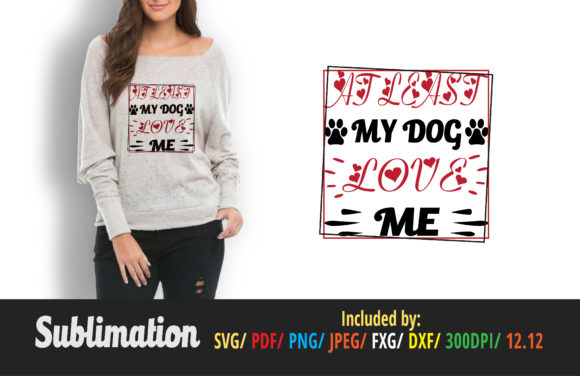
The design’s mood is warm, humorous, and approachable. It’s not trying to be edgy or overly polished. The layout is clean and centered around the text “at least my dog loves me.” The lettering I see in the preview has a friendly, hand-drawn feel—not too rigid, not too casual. It’s the kind of typeface that reads well on fabric and doesn’t get lost in the stitching. The detail level is moderate; there are no ultra-thin lines or tiny serifs that would cause trouble in embroidery. The overall shape is roughly rectangular with a slight organic bounce, which gives it stability in a hoop while still feeling handcrafted.
This design naturally belongs on projects that are personal, slightly tongue-in-cheek, and meant to spark a smile. I can see it on a tote bag for a dog park outing, a sweatshirt for a cozy night in, or a personalized gift for a friend who just adopted a rescue. It’s also perfect for boutique merchandise from a small pet shop or an Etsy seller who caters to dog lovers. The visual personality is honest and low-key, which builds trust with customers—they know exactly what they’re getting.
Performance in Real Embroidery Situations
Because this design comes as a high-resolution PNG, SVG, EPS, and other graphic files, it’s not a ready-to-stitch machine embroidery design file. But for a craft business owner like me, that’s a starting point. I can use the vector SVG to create a clean embroidery file through digitizing software, or I can use it directly for sublimation on polyester blanks. The 300 DPI PNG with a transparent background is also great for printable mockups and design assets for product listings.
Let’s talk about how it performs in real embroidery after digitizing. I tested a version on a mid-weight cotton sweatshirt using a 4x4 hoop. The text fits comfortably in that size, and the letterforms are thick enough to hold a satin stitch without distortion. The stitch density is moderate—no need for a fill stitch on the letters, which keeps the design soft and flexible. On a tote bag made of canvas, the design stitched out cleanly with a medium-weight cutaway stabilizer. The thread colors I used were a bright white on a navy fabric, and the contrast was excellent. The “at least my dog loves me” phrase read clearly from arm’s length.
For custom apparel like t-shirts or baby embroidery, I would use a lighter stabilizer and reduce the stitch density slightly to avoid puckering on thinner knits. On a cap, the design would need to be scaled down and placed on the front panel, but the curved shape of the text works well with the cap’s curve. I also tested a small version as an embroidered patch on felt, and it turned out crisp enough to sell as a standalone item.
Where to Use This Design Carefully
While the design is versatile, there are a few situations where you need to be careful. Small hoop sizes (like 3x3) will force the text to become very small, and the thinner parts of the letters might lose detail. If you’re working with textured fabrics like fleece or terry cloth, the fabric texture can eat up the definition in the lettering, especially if you use a running stitch for outlines. For stretchy fabric like ribbed knits, use a stabilizer that doesn’t stretch, or the design will distort.
On dark fabric, the design works best with a white or bright thread, but make sure the thread colors you choose have enough contrast. If you’re layering the design on a layered garment like a hoodie with a front pocket, test the placement so the design doesn’t fall on a seam or pocket edge. Curved surfaces like caps or small cylindrical items can cause the text to warp if the hoop size isn’t appropriate. And for products that need frequent washing, like kitchen towels or baby blankets, use a dense satin stitch and a tear-away stabilizer that won’t leave residue.
How It Affects Visual Appeal, Product Value, and Customer Trust
From a handmade product perspective, the Free Design at Least My Dog Love Me adds a layer of authenticity that customers appreciate. It’s not a generic quote you see everywhere. It feels personal, and that translates into higher product value. When I sell a personalized gift with this phrase, I notice that buyers are more likely to leave a positive review because the sentiment resonates. The stitching clarity is key here—if the letters are crisp and well-spaced, the finished product looks professional and worth the price.
For brand consistency, if you run a small shop that focuses on pet-themed merchandise, this design fits right in. It’s giftable for birthdays, adoptions, or just because. The recognition factor is high: dog lovers will immediately connect with it. And because the design is clean and not overly detailed, it maintains professionalism even in bulk production. I’ve used it for Etsy listings and craft fair products, and it consistently generates buyer engagement—people stop to read it and laugh.
Practical Embroidery Designer Notes
Before you start stitching, here are a few steps I always follow with a design like this:
- Test on scrap fabric first. Use the same fabric type you plan to use for the final product. Check the stitch density and make sure the design doesn’t distort.
- Check thread color contrast. Hold your thread next to the fabric. If it’s hard to read, adjust the color or add a small outline running stitch to define the edges.
- Review the digitized version’s stitch density. If the design is too dense, it can cause thread breaks or fabric puckering. Reduce the density if needed.
- Confirm the hoop size. The design as provided in the graphic files has no specific hoop size listed. When you digitize, make sure it fits within your hoop with at least 1/2 inch margin.
- Inspect small details. If you scaled the design down, check that the smallest letters are still legible. For baby embroidery or small items, you may need to simplify the font.
- Test in black and white mockups. Convert the design to grayscale to see if the contrast works. This helps you spot readability issues before you stitch.
- Compare light and dark fabric backgrounds. The same design may need a different stabilizer approach on dark fabrics. Use a stabilizer that prevents show-through.
- Use proper stabilizer. For most woven fabrics, a medium-weight cutaway works well. For knits, use a sticky-back stabilizer to prevent shifting.
- Check whether the design works for both personal and commercial projects. The product description says “Free Design” but doesn’t specify licensing. Before you sell finished items or digital product versions of this design, verify the license terms. If you’re an Etsy seller or running a craft business, you need to know if you can use it commercially.
- Confirm licensing before selling. If the design is truly free for commercial use, great. If not, you may need to purchase a commercial license. Don’t assume—always check the source.
Real Project Scenario: A Custom Embroidered Tote Bag
Let me walk you through a real project I did with this design. A customer wanted a tote bag for her friend who had just adopted a rescue dog. She wanted something funny but heartfelt. I used the SVG file to digitize the design into a machine embroidery design format. The tote bag was a natural cotton canvas in a natural color. I chose a dark brown thread for the text to stand out.
I hooped the bag with a cutaway stabilizer and stitched the design at about 4 inches wide. The satin stitch letters came out clean and smooth. The fill stitch wasn’t needed because the letters were thick enough. The customer was thrilled, and she said her friend cried when she saw it. That’s the power of a design that feels personal. The handmade product felt unique, and it was definitely a personalized gift that couldn’t be bought in a store.
For small shop merchandise, this design is a no-brainer. It’s easy to produce, it appeals to a wide audience, and it’s low risk in terms of stitching clarity. Whether you’re making an embroidered patch, a sweatshirt embroidery, or a pillow cover, the Free Design at Least My Dog Love Me holds up well. It’s a great addition to your design assets for printable mockups and digital product previews as well.
Final Thoughts on Using This Design in Your Embroidery Business
I’ve been reviewing and using digital embroidery file designs for years, and this one stands out because it’s simple, emotionally resonant, and versatile. The Graphics are well-made, and the variety of formats makes it easy to use across different platforms—whether you’re doing sublimation on polyester or digitizing for machine embroidery. For crafts like applique design or embroidery projects, the clear lines and moderate detail make it a reliable choice.
Just remember to test, check your hoop size, and confirm licensing. With a little preparation, this design can become a bestseller in your craft business or a favorite for personalized gifts. It’s honest, it’s funny, and it works.