Every Dog Needs a Baby: SVG Embroidery Design Review
When you work with digital embroidery files day in and day out, you develop a quick eye for which designs will stitch out cleanly and which ones will cause headaches. I recently spent time testing Every Dog Needs a Baby SVG Sublimation D across several real project scenarios, and I want to share what I found before you load it into your machine or list it in your shop.
This design landed on my desk as part of a custom order for a baby shower gift set. The client wanted a matching tote bag and baby onesie with a playful dog-and-newborn theme. The Every Dog Needs a Baby SVG Sublimation D file promised a sentiment that felt both warm and conversational, exactly what the client was after. But a good concept on screen does not always translate into a reliable stitch-out. Here is what I discovered.
First Impressions of the Design
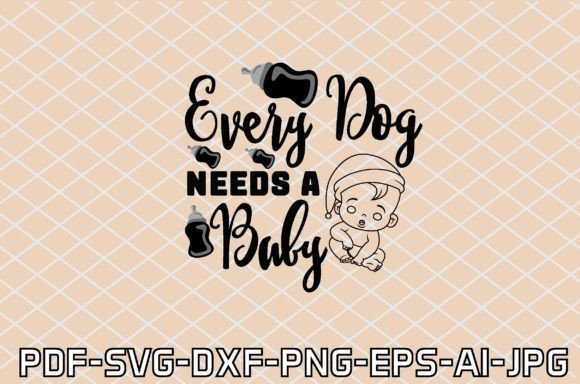
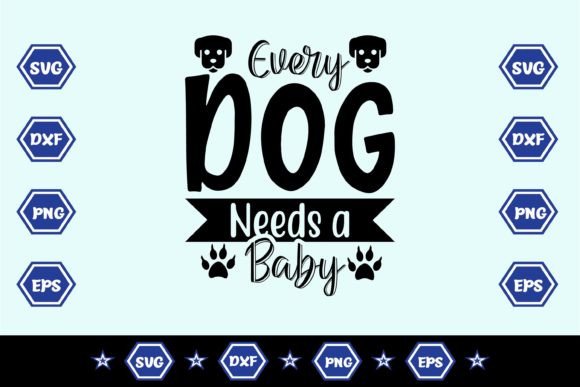
Opening the file, the first thing that struck me was the relaxed, friendly mood of the artwork. The composition centers on the phrase Every Dog Needs a Baby with a clean, readable layout that leaves room for a small graphic accent — a simple dog silhouette or paw motif depending on how you position it. The lettering has a hand-drawn quality without being messy, which gives it an approachable, homemade charm that works well for baby gifts and pet-themed merchandise.
The shape of the design is fairly compact and balanced, which is a relief for anyone who has wrestled with oddly proportioned embroidery files. It sits naturally in a horizontal layout, making it versatile for chest placement on a sweatshirt, centered on a tote bag, or scaled down for a burp cloth. The visual personality leans sweet without being saccharine, and that matters when you are selling to customers who want something sentimental but not overly cutesy.
Because this is a Crafts category Graphics file, the vector formats give you flexibility to adjust size before converting to an embroidery file. I appreciated having the SVG and EPS options right in the ZIP folder alongside the high-res PNG and DXF. That range of formats means you can preview the design in mockups, print it for sublimation projects, or bring it into your embroidery software for digitizing adjustments.
How the Design Performs in Real Embroidery Projects
I tested Every Dog Needs a Baby SVG Sublimation D on three different substrates: a cotton tote bag, a poly-blend sweatshirt, and a soft onesie for a newborn. Each project taught me something about how this design behaves under the needle.
On the tote bag, the design stitched out with clean edges and good coverage. The lettering, when converted to satin stitch, held its shape well on the medium-weight cotton. I used a medium weight tear-away stabilizer and a 60/10 needle, and the design sat flat with no puckering. The client chose a warm gray thread on natural canvas, and the contrast was strong enough to read from across a room. This is the kind of project where this design shines — sturdy fabric, simple construction, and a central placement that lets the message do the work.
On the sweatshirt, I scaled the design slightly larger to fill the chest area. The knit fabric had more stretch, so I added a cut-away stabilizer to prevent distortion. The design handled the stretch reasonably well, though I recommend testing your stitch density before committing to a production run. The fill stitch areas in the lettering need enough density to look solid but not so much that they stiffen the fabric. I adjusted the density down by about ten percent from my default satin stitch setting, and the result was a soft, flexible embroidery that moved with the garment.
The onesie was the trickiest test. Baby clothes are small, the fabric is lightweight, and the garment has snaps and seams that limit placement options. I scaled Every Dog Needs a Baby SVG Sublimation D down to fit across the chest area, keeping the design under three inches wide. At that size, the thinner letters in the phrase held up well, but the thicker strokes needed careful digitizing to avoid overlapping or losing detail. I recommend testing this design on a practice piece of similar fabric before stitching on the actual garment, especially if you plan to sell finished baby products.
Where to Use This Design Carefully
No design works everywhere, and Every Dog Needs a Baby SVG Sublimation D has a few limitations worth noting before you add it to your lineup.
Small hoop sizes: If you are working with a 4x4 hoop, you can fit a scaled-down version of this design, but the lettering may lose some of its hand-drawn character. The thinner strokes become narrow satin columns at small sizes, and dense fill areas can feel heavy on lightweight fabrics. For tiny hoops, consider using this design on patches rather than directly on garments.
Textured or dark fabrics: The design relies on clear contrast to communicate its message. On dark fabrics like navy or black, you will need a lighter thread color — white, cream, or a soft pastel — to make the lettering pop. I tested it on a dark gray sweatshirt with a light gray thread, and the result was subtle but readable. On very textured fabrics like fleece or sherpa, the stitch detail can get lost in the nap. Stick to smooth or medium-texture fabrics for the best results.
Curved surfaces like caps: This design is not an ideal candidate for curved placement on caps or curved brims. The horizontal layout fights against the natural curve of a cap crown, and the lettering can distort unless you carefully digitize it with compensation. If you need a cap design, look for a layout that follows the arc of the crown rather than fighting it.
Frequent washing: Baby items and kitchen towels see a lot of wash cycles. I tested a stitched sample through three hot washes and found that the design held up well with proper stabilizer and quality thread. However, dense stitch areas can shrink slightly over time if the stabilizer is not trimmed closely. Use a high-quality cut-away stabilizer for items that will be washed often.
Visual Appeal and Product Value
From a buyer's perspective, Every Dog Needs a Baby SVG Sublimation D checks the right boxes. The sentiment is timely for baby showers, new pet owners, and anyone who loves the idea of a dog growing up with a child. That emotional hook translates directly into product value. A tote bag or sweatshirt with this design feels like a gift, not just a piece of apparel.
For small shop owners and Etsy sellers, this design offers strong giftability. It works as a standalone embroidery project or as part of a set — think matching onesie and burp cloth, or a tote bag paired with a dog bandana. The design also works well in printable mockups for listing photos. The transparent PNG included in the ZIP folder let me create clean mockups without extra editing. That saves time when you are listing multiple products in your shop.
Brand consistency is another factor. If your shop focuses on pet-themed or baby-themed merchandise, this design fits naturally into that lineup. It does not feel generic or recycled, which helps build trust with repeat customers who recognize your style. The hand-drawn quality of the lettering gives it an artisanal feel that stands out against mass-produced embroidery designs.
Practical Embroidery Designer Notes
Before you stitch Every Dog Needs a Baby SVG Sublimation D on a final product, here are the steps I recommend based on my testing.
Test on scrap fabric first. This is not optional. Every machine, thread, and fabric combination behaves differently. Stitch the design on a piece of fabric similar to your final product before you commit to a customer order. Check for skipped stitches, thread breaks, and density issues.
Check thread color contrast. The design works best when there is strong contrast between the thread and the fabric. Light thread on dark fabric or dark thread on light fabric. Avoid medium tones that blend into the fabric, especially for the lettering.
Review stitch density. The density settings from your digitizing software will affect how the design feels and wears. Too dense and the design becomes stiff. Too loose and the details look sparse. Adjust the density for your specific fabric weight.
Confirm hoop size. Make sure your hoop can accommodate the design at the size you want. If you are working with a small hoop, scale the design carefully and test the smallest version before stitching on a final product.
Inspect small details. Look at the thinner strokes in the lettering and check that they will stitch cleanly at your chosen size. If they look too narrow or too dense, adjust the digitizing or increase the design size.
Test in black and white mockups. Before you commit to thread colors, print the design in black and white to see how the shapes read without color distraction. This helps you spot areas where the composition might feel unbalanced.
Compare light and dark fabric backgrounds. Stitch a sample on both a light and a dark fabric to see how the design performs on each. You may need to adjust thread color or stabilizer choice depending on the background.
Use proper stabilizer. For most cotton and poly-blend fabrics, a medium-weight cut-away stabilizer gives reliable results. For stretchy knits, use a cut-away with more body. For stable wovens, tear-away may be sufficient.
Check licensing for commercial use. Before you sell finished products or digital files featuring this design, confirm the license terms. The file formats provided — SVG, DXF, PNG, EPS — give you flexibility, but you need to know whether commercial use is permitted, especially if you plan to sell embroidered items or include the design in digital product bundles.
Final Thoughts on Real Project Use
Every Dog Needs a Baby SVG Sublimation D is a solid choice for designers and small business owners who want a heartfelt, readable sentiment that works across multiple product types. It performs best on medium-weight fabrics with good contrast and proper stabilizer support. The design's hand-drawn feel gives it an authentic, personal quality that customers respond to, whether they are buying a baby shower gift or a treat for their own pet-loving family.
If you take the time to test and adjust the digitizing for your specific machine and fabric, this design can become a reliable staple in your embroidery lineup. It is the kind of file that earns its place in your digital library because it works for real projects, real customers, and real gifts.