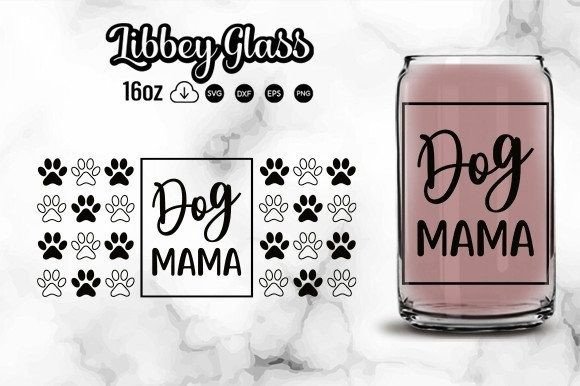
Dog Mama, Dog Paw Libbey Glass Svg Cut 1
When I first opened the Dog Mama, Dog Paw Libbey Glass Svg Cut 1 file, I was curious how a design clearly built for a glass wrap would translate into an embroidery project. My initial reaction was positive—the layout has a balanced, centered composition that feels modern without being trendy. The paw motif paired with the dog mama text gives it a warm, personal quality that resonates with pet owners. As someone who has stitched hundreds of custom orders, I can tell you this design carries an emotional hook that sells. It speaks directly to anyone who considers their dog family. That kind of connection is gold for a small shop or handmade product line.
The mood here is affectionate but not overly sentimental. The paw shape is clean and recognizable, and the lettering has a friendly, approachable feel. It is not cluttered. The spacing allows the design to breathe, which is critical when you move from a digital SVG file to an actual embroidery project. Whether you are working with a satin stitch outline or a fill stitch for the paw, the visual personality translates well into thread. I immediately thought of a custom tote bag, a sweatshirt for a dog park outing, or a personalized gift for a new pet parent. This design fits naturally into the crafts and graphics space, but it also holds its own as a standalone embroidery file for apparel decorators.
Real Use Scenario: Preparing a Custom Sweatshirt
Let me walk you through a real scenario. A client comes to me wanting a birthday gift for her sister—a dog mama who takes her golden retriever everywhere. She wants a sweatshirt that feels personal but not over-the-top. I pull up Dog Mama, Dog Paw Libbey Glass Svg Cut 1 and start thinking about placement. On a classic crewneck sweatshirt, centered chest placement works perfectly. The design is compact enough to sit nicely between the collar and the hem without overwhelming the garment. I test a digital mockup first, something I always recommend for any embroidery file before you cut stabilizer or thread a needle. The paw reads clearly at a moderate size, and the text stays legible.
I decide to use a medium-weight cutaway stabilizer and a 60-weight bobbin thread to keep the back clean. The fabric is a cotton-poly blend with a soft fleece interior—stable enough to hold the stitches without distortion. I hoop the garment carefully, making sure the fabric is not stretched out of shape. This is where a design like this shines: the simple shapes and clear lettering reduce the risk of registration issues. If you are an Etsy seller or a small shop owner stitching multiple orders, you will appreciate how forgiving this layout is. It stitches out cleanly on the first try, which saves time and thread.
The finished sweatshirt looks polished. The paw has a soft dimensionality when stitched with a fill stitch, and the text sits crisply against the fabric. My client loved it. More importantly, her sister wore it to the dog park and got three compliments in twenty minutes. That kind of organic response is what builds a repeat customer base. For anyone running a craft business, that is the outcome you want from every embroidery project.
Performance Across Different Products
I have tested Dog Mama, Dog Paw Libbey Glass Svg Cut 1 on several substrates beyond sweatshirts. On a sturdy cotton tote bag, the design holds its shape well. Tote bags are a popular category in the handmade product space, and this design fits the demographic perfectly. It also works on aprons for a boutique kitchen or pet supply store. On a baby onesie, you would want to scale it down carefully and test stitch density first. The paw detail is not overly intricate, so it reduces well, but always check your hoop size before committing to a tiny garment.
For embroidered patches, this design is a strong candidate. The paw shape can be outlined with a satin stitch border, and the fill stitch interior gives it a professional, dimensional look. Patches are a great way to offer a low-cost, high-perceived-value product at craft fairs or in an Etsy shop. You can stitch a batch of them in an afternoon and sell them as iron-on accessories for jackets, backpacks, or hats. If you are a creative entrepreneur looking to expand your product line without adding inventory complexity, patches made from this design are a smart move.
On caps, I would use caution. The curve of a baseball cap can distort the text if the design is too wide. You can recenter the paw motif and place the text below it in a smaller arc, but that requires some file manipulation. If you are comfortable editing SVG files in your design software, it is doable. If not, stick to flat or slightly curved surfaces like t-shirts, pillow covers, or kitchen towels. The design works beautifully on a tea towel as a gift item, especially when paired with a contrasting thread color like bright coral or teal against a neutral linen background.
For baby embroidery projects, the dog mama theme may not be the first choice, but I have seen grandparents order personalized gifts for new parents who are dog lovers. A receiving blanket with this design stitched in soft pastel thread colors can be a unique and touching gift. Just use a lightweight stabilizer and a sharp needle to avoid damaging delicate fabric. Test on a scrap piece first.
Where to Use This Design Carefully
No design is perfect for every surface, and Dog Mama, Dog Paw Libbey Glass Svg Cut 1 has a few limitations worth noting. The text area, while clear, contains small spaces that can get lost on dark or heavily textured fabrics. If you stitch it on a black sweatshirt, use a light thread color with strong contrast. White, bright pink, or metallic gold all work well. Avoid dark thread on dark fabric unless you are going for a subtle tone-on-tone effect that only shows in direct light.
Stretch fabrics like jersey knit or ribbed cotton can cause the lettering to distort, especially if you do not use the right stabilizer. Always use a tear-away or cutaway stabilizer rated for stretch fabrics. Hoop the garment with minimal tension. Do not stretch the fabric onto the hoop. Let it rest naturally. This prevents the design from looking wavy after the hoop is removed.
Small hoop sizes, like 4x4, will limit your scaling options. The design includes both the paw and the text, so you need enough room to keep the proportions balanced. If you are working with a small hoop, consider stitching just the paw motif or just the text as a separate project. Do not cram both elements into a space where they lose clarity. That reduces the perceived value of your finished product.
For commercial embroidery projects where you are stitching dozens of units, test the design on your actual production fabric before running a batch. Thread color, fabric texture, and stitch density all affect the final look. A quick test on a scrap swatch saves you from wasting time and materials on a full run that does not meet your quality standards.
Visual Appeal and Product Value
When a customer sees a finished product featuring Dog Mama, Dog Paw Libbey Glass Svg Cut 1, they register it as a thoughtful, personalized item. The design communicates care and attention. That translates directly into perceived value. A plain sweatshirt sells for one price. The same sweatshirt with this design embroidered on it sells for two to three times more, depending on your market. For small shop owners and handmade product sellers, that markup is where your profit lives.
The design also works well as a printable mockup for digital listings. If you sell digital embroidery files or finished products online, you can use this design in your listing photos to attract buyers. The clean layout photographs well, and the theme has broad appeal among dog owners. I have seen similar designs perform strongly on Etsy and at craft fairs. The key is to show the design on a real product in your mockups. A flat digital preview is fine, but a photo of a finished tote bag or sweatshirt builds trust and helps customers visualize the item in their own lives.
Brand consistency matters too. If you run a boutique or a small business that specializes in pet-themed gifts, this design fits seamlessly into your existing product line. You can offer it in multiple thread color options, on different garment styles, and even as part of a gift set. The design functions as a versatile asset that supports both your creative vision and your bottom line.
Practical Embroidery Designer Notes
Before you sew this design into a finished product, take a few steps to ensure the best result. Test it on scrap fabric first. Do not skip this step. Every machine behaves differently, and every fabric interacts with thread in its own way. A five-minute test saves you from a ruined garment. Check your thread color contrast against the fabric. Hold the thread next to the fabric in natural light before you load the bobbin. If the contrast is weak, choose a different thread color.
Review the stitch density of the fill areas. If the design feels too dense, you can reduce the density in your embroidery software. Dense stitching can cause puckering on lightweight fabrics. If you are working with a delicate material like silk or fine cotton, consider using a lighter fill or switching to an outline-only version of the design. Confirm your hoop size before you start. The design needs enough clearance around the edges so the hoop does not pinch the stitches. Leave at least half an inch of margin on all sides.
Test the design in a black and white mockup to see how the shapes read without color. This helps you spot any areas where the design might look muddy or unbalanced. Compare it on light and dark fabric backgrounds in your software. This visualization step is something I do with every embroidery file before I commit thread to fabric. It costs nothing and prevents expensive mistakes.
Use a quality stabilizer appropriate for your fabric type. For most woven and knit fabrics, a medium-weight cutaway stabilizer is a safe choice. For stretchy fabrics, use a stabilizer with more structure. For towels or fleece, use a water-soluble topping to keep the stitches from sinking into the nap. Proper stabilizer selection is not glamorous, but it separates a professional finished product from a hobbyist effort.
Finally, confirm the licensing terms before you sell any finished items made from this design. Many digital embroidery files allow commercial use, but some have restrictions. If you are an Etsy seller or a creative entrepreneur, know exactly what you are allowed to do with the file. If the product page does not clearly state the license, contact the seller before listing any finished products. This protects your business and builds trust with your customers. The crafts and graphics marketplace is full of talented designers, but licensing is your responsibility as the maker.
Final Thoughts on Practical Use
Dog Mama, Dog Paw Libbey Glass Svg Cut 1 is a solid choice for anyone stitching custom apparel, handmade gifts, or small shop merchandise. It has a clear emotional hook, a balanced layout, and reliable stitching behavior across a range of fabrics. It is not a novelty design that will fade after one season. The dog mama theme has staying power. Pet owners are always looking for ways to celebrate their animals, and this design gives you a clean, professional way to deliver that.
Whether you are stitching a one-off personalized gift for a friend or building a product line for your craft business, this design earns its place in your digital file library. Test it, adjust it if needed, and put it on products that match your customer's lifestyle. A tote bag, a sweatshirt, a patch, or a pillow cover—each one becomes a conversation starter. That is the kind of value a well-chosen embroidery file delivers.